

In today’s complex medical landscape, healthcare facility accreditation compliance is much more than a box-ticking exercise for regulatory bodies; it is the backbone of patient safety and clinical excellence. For administrators and clinicians alike, understanding the nuances of these standards is essential for fostering trust and ensuring that care delivery meets the highest national expectations. Whether your facility is preparing for an initial survey or looking to refine existing protocols, navigating these requirements demands a proactive and integrated approach.
In this guide, we will explore the strategic frameworks necessary to maintain high standards, helping you move beyond basic adherence toward a culture of continuous readiness. We will discuss how to optimize internal audits, leverage clinical operational excellence frameworks to streamline workflows, and ensure that your facility is consistently aligned with evolving safety benchmarks. By focusing on these core areas, you can improve patient outcomes and simplify the path toward choosing accredited healthcare facilities that prioritize long-term, high-quality care. Together, we will demystify the accreditation lifecycle to help your team turn compliance into a sustainable competitive advantage.
1. Strategic Framework for Healthcare Facility Accreditation Compliance
Achieving and maintaining healthcare facility accreditation compliance is far more than a regulatory hurdle; it is a fundamental pillar of clinical governance. By aligning internal practices with nationally recognized standards, healthcare organizations foster a systematic approach to quality, safety, and operational transparency. This strategic framework serves as the blueprint for transforming compliance from a reactive, audit-driven necessity into a proactive strategy that drives clinical excellence.
1.1 The Role of Accrediting Bodies and Regulatory Alignment
1.1.1 Evaluating the impact of The Joint Commission, DNV, and HFAP standards
Accrediting bodies such as The Joint Commission, DNV, and the Healthcare Facilities Accreditation Program (HFAP) establish the rigorous healthcare quality benchmarks that define elite care delivery. While each body has a unique methodology—such as DNV’s integration of ISO 9001 quality management systems—they all share the goal of reducing clinical variation and enhancing patient safety. Choosing an accrediting partner often depends on a facility’s specific operational culture and its commitment to particular models of care.
1.1.2 Distinguishing between voluntary accreditation and federal CMS Conditions of Participation
It is vital to distinguish between voluntary accreditation and the mandatory CMS Conditions of Participation (CoPs). While accreditation is technically voluntary, it is often a “deemed status” pathway that allows facilities to demonstrate compliance with Medicare requirements without undergoing separate state surveys. Understanding this distinction helps leadership navigate the complexities of regulatory alignment, ensuring that the facility remains eligible for federal funding while pursuing higher tiers of clinical standards.
1.2 Assessing the Financial and Operational ROI
1.2.1 Leveraging accreditation for improved payer contracting and reimbursement rates
Accreditation acts as a powerful signal of quality to both patients and insurers. Payers are increasingly prioritizing network providers who can demonstrate consistent clinical operational excellence frameworks, often linking these achievements to more favorable reimbursement contracts. Facilities that achieve prestigious designations, such as a center of excellence certification, often see significant improvements in market share and competitive positioning.
1.2.2 Quantifying the impact of patient safety benchmarks on liability insurance premiums
A rigorous commitment to accreditation directly influences institutional risk profiles. By consistently meeting high-level safety benchmarks, facilities can effectively lower their incidence of adverse events, which often translates into more manageable liability insurance premiums. This financial predictability allows for the reallocation of resources toward innovation and staff development.
1.3 Establishing an Internal Audit Infrastructure
1.3.1 Implementing a gap analysis framework to identify high-risk clinical workflows
An effective internal audit infrastructure begins with a periodic gap analysis. By mapping current clinical processes against accreditation standards, leadership can pinpoint high-risk workflows where deviation is most likely. This process creates a clear roadmap for remediation before external surveyors arrive, turning potential vulnerabilities into areas for improvement.
1.3.2 Standardizing documentation processes to ensure evidence of practice meets national criteria
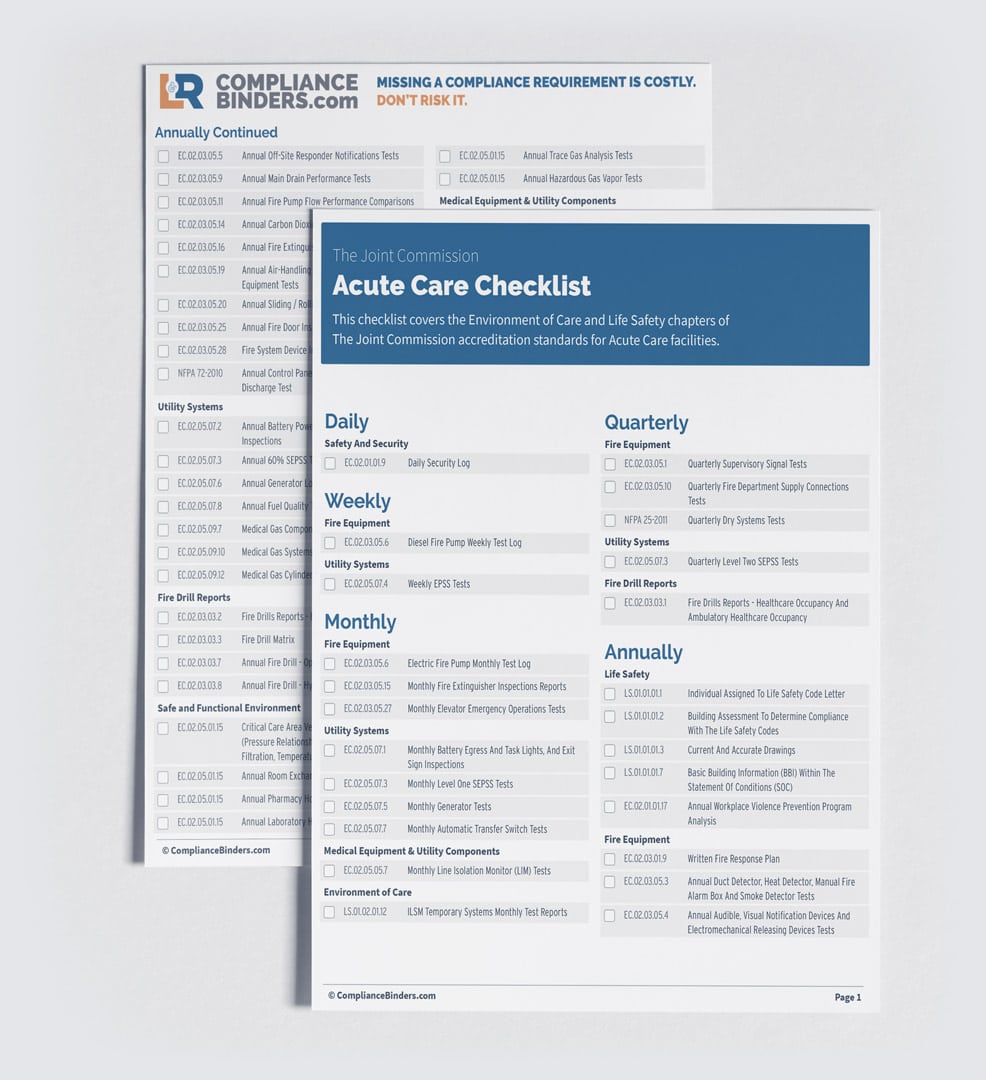
Documentation is the evidence of quality. Standardizing these processes ensures that patient care workflow optimization is clearly reflected in medical records. By creating templates and protocols that mirror national criteria, staff can focus on delivering high-quality care, confident that their documentation will provide the necessary objective evidence to satisfy surveyors during rigorous site visits.
2. Navigating the Accreditation Lifecycle and Maintaining Compliance
2.1 Execution Strategies for the On-Site Survey and Beyond
The on-site survey is often viewed as a high-pressure event, but it should be approached as a collaborative dialogue focused on patient safety. Successful surveyor management begins long before the inspectors arrive. Instead of treating the survey as a test, frame it as a professional peer review process. Train staff to answer questions honestly, concisely, and based on their daily responsibilities rather than rehearsed scripts. When surveyors ask for evidence, provide documentation that demonstrates how your clinical operational excellence frameworks translate into actual practice, rather than providing “paper compliance” that lacks real-world application.
When surveyors identify gaps, your response determines your facility’s long-term trajectory. Developing robust Corrective Action Plans (CAPs) requires more than just fixing a single error; it demands a root cause analysis to determine why the non-compliance occurred in the first place. Whether it involves upgrading a piece of equipment or refining a specific patient care workflow optimization, your CAP must show a permanent change in system design. Demonstrating that your leadership team has actively monitored the effectiveness of these corrections turns a negative finding into a display of organizational maturity and commitment to quality.
2.2 Transitioning to a Culture of Continuous Survey Readiness
Moving away from the feast-or-famine cycle of survey preparation is essential for long-term health system viability. Modern facilities now integrate digital compliance management software to maintain real-time visibility into their operational standards. These platforms act as a central repository for policy, training completion, and incident reporting, allowing administrators to pull data instantly when questions arise. By digitizing these touchpoints, your facility ensures that the evidence required for accreditation is always current, drastically reducing the scramble that typically occurs when an unannounced survey window opens.
Automation also serves as a vital safeguard against staff burnout. When clinical teams are forced to manually audit every file for compliance, they spend less time at the bedside. By automating routine internal audits—such as tracking equipment maintenance cycles or verifying credentialing renewals—you empower staff to focus on patient-centered care. This shift fosters a culture of constant, subtle refinement rather than reactive panic. To learn more about how quality metrics and standards affect your operations, refer to our Healthcare Facility Ranking Metrics: A Quality Guide.
2.3 Mitigating Liability and Regulatory Risk
Regulatory landscapes are constantly shifting, particularly regarding infection control and emergency preparedness. To mitigate risk, your facility must look beyond minimum federal requirements and align with evidence-based best practices. This means participating in industry forums and monitoring bulletins from accrediting bodies to stay ahead of upcoming changes in safety mandates. By treating these standards as a living strategy rather than a static checklist, you protect both the patient population and the organization from potential liability and litigation.
Scaling these protocols across multi-facility networks presents unique challenges in standardization. To maintain consistency, develop a centralized compliance office that establishes universal policies while allowing for local flexibility in implementation. By creating a unified “source of truth” for documentation, a health system ensures that every site—regardless of size or location—adheres to the same rigorous healthcare quality benchmarks. This approach not only simplifies the accreditation process for the entire network but also creates a predictable, safe experience for patients, no matter which clinic they visit.
Achieving and maintaining healthcare facility accreditation compliance is far more than a regulatory hurdle; it is a fundamental commitment to operational integrity and superior patient outcomes. By aligning internal practices with rigorous national standards, facilities move beyond basic legal requirements to create a culture of continuous improvement. As we have explored, the path to sustained excellence requires a robust internal audit infrastructure, a proactive approach to survey readiness, and a commitment to integrating evidence-based workflows into the daily life of the clinic.
When you prioritize these quality benchmarks, you are not just checking boxes for compliance auditors—you are fostering a safer, more reliable environment for your patients. Investing in digital monitoring and standardized documentation practices ultimately mitigates risk, improves payer relationships, and strengthens the overall reputation of your medical practice. To ensure your facility consistently meets the highest standards, we recommend regularly reviewing your internal procedures alongside professional guidance, such as our guide on choosing accredited healthcare facilities, to stay ahead of the evolving regulatory landscape. By embedding compliance into your organizational DNA, you provide your staff with the structure they need to succeed and your patients with the confidence that they are receiving the highest level of care possible.