

In the modern healthcare landscape, operational fluidity is not just a logistical goal—it is a cornerstone of exceptional care delivery. Effectively managing waiting time metrics and scheduling efficiency is essential for clinics that aim to balance provider availability with the growing demand for timely services. When patients encounter significant delays, it often creates friction that ripples through the entire practice, negatively impacting both staff morale and the quality of care provided. By shifting focus toward data-driven optimization, administrators can transform how their facilities operate, ultimately fostering a more supportive environment for everyone involved.
In this guide, we explore how you can move beyond simple appointment management to implement sophisticated frameworks that streamline workflows and minimize bottlenecks. Readers will learn how to leverage precise operational metrics, refine resource allocation, and integrate modern scheduling strategies to enhance overall patient satisfaction ratings. Whether you are addressing minor scheduling lags or seeking to overhaul your clinic’s entire throughput, understanding these core principles is the first step toward sustainable operational excellence.
1. Optimizing Waiting Time Metrics and Scheduling Efficiency Through Data Analysis
1.1 Defining Core Operational Metrics for Service and Production Environments
To achieve operational excellence, healthcare providers must first speak the language of efficiency. By borrowing frameworks from industrial production, clinics can quantify the patient experience and identify where resources are being underutilized. Understanding these metrics is the first step toward improving clinical operational excellence frameworks for best clinics.
1.1.1 Distinguishing Between Cycle Time, Lead Time, and Takt Time
Cycle time measures the total time spent actively interacting with a patient from the moment the appointment begins until it concludes. In contrast, lead time encompasses the entire duration from a patient’s initial request for an appointment to the completion of their care. Takt time represents the heartbeat of the clinic—the frequency at which you must complete a patient appointment to meet the total daily demand. Balancing these three ensures that your scheduling isn’t just fast, but sustainable.
1.1.2 Implementing Queueing Theory to Model Customer and Resource Flow
Queueing theory provides the mathematical backbone for understanding why patients wait. By modeling arrival rates versus service rates, providers can predict the likelihood of bottlenecks during peak hours. This analysis helps determine the number of staff members needed at various times of the day to maintain a steady flow, preventing the chaotic “bunching” that leads to long waiting rooms.
1.1.3 Establishing Baselines for Idle Time and Processing Latency
Idle time occurs when clinical staff are available but lack patients, while processing latency refers to the “dead air” in a workflow, such as waiting for lab results or room turnover. Establishing clear baselines for these metrics allows leadership to distinguish between scheduled gaps and inefficient operational friction that drains productivity.
1.2 Diagnostic Approaches to Identifying Operational Bottlenecks
Once metrics are defined, diagnostic mapping reveals the root causes of delays. Often, what appears to be a staffing issue is actually a structural constraint in the patient journey.
1.2.1 Techniques for Mapping Process Workflows to Pinpoint Delays
Process mapping involves documenting every step a patient takes from check-in to checkout. By identifying “handoffs”—points where a patient moves from the front desk to a nurse, then to a provider—you can spot the exact stages where communication breaks down. These visual aids are essential for optimizing patient care workflows and ensuring that no single point in the clinic becomes a permanent bottleneck.
1.2.2 Analyzing Data Accuracy and Preventing Common Measurement Bias
Data is only as good as the input. Relying solely on self-reported check-in times can lead to bias, as staff may unintentionally record “ideal” times rather than reality. Automated timestamping in electronic health records provides the objective, granular data required for true process improvement.
1.2.3 Utilizing Value Stream Mapping to Visualize Hidden Constraints
Value stream mapping highlights which activities provide direct value to the patient versus those that create administrative burden. By visualizing these constraints, managers can eliminate redundant paperwork or redundant diagnostic steps that do not contribute to positive health outcomes.
1.3 Essential KPIs for Measuring Scheduling Success
Effective management requires clear benchmarks that link internal efficiency to the broader goals of patient-provider communication efficacy.
1.3.1 Defining First-Pass Yield and Resource Utilization Rates
First-pass yield measures the percentage of appointments that proceed without rescheduling or errors. High yield indicates a smooth front-end operation. Resource utilization rates further clarify how effectively exam rooms and providers are scheduled, ensuring that high-value assets are not sitting empty during prime operating hours.
1.3.2 Assessing Customer Satisfaction Scores in Relation to Wait Intervals
Wait times are the most significant driver of patient sentiment. By correlating quantitative wait intervals with patient satisfaction ratings, clinics can identify the exact threshold where frustration begins to impact retention. Tracking this relationship transforms scheduling from a logistical task into a powerful tool for building patient loyalty and long-term trust.
2. Implementing Advanced Scheduling Efficiency Strategies and Modern Tooling
2.1 Strategic Frameworks for Demand Management
Effective demand management requires a shift from reactive booking to proactive capacity alignment. By applying Just-in-Time scheduling, clinics can minimize inventory—in this case, the time patients spend in waiting areas—by aligning appointment slots precisely with clinical availability. This approach prevents the accumulation of bottlenecks that often frustrate both staff and patients.
Leveraging predictive analytics allows practices to move beyond static templates. By analyzing historical trends and seasonal health patterns, administrators can forecast daily demand with high accuracy. This foresight enables the adjustment of staffing levels before a surge occurs, ensuring that patient-provider communication efficacy remains high even during peak operational hours. Utilizing dynamic slotting further enhances this by allowing the system to automatically adjust appointment durations based on the complexity of the visit, ensuring that resource allocation is always optimized for the current workload.
2.2 Prioritization Models and Load Balancing Techniques
Managing the flow of patients requires more than just filling gaps in a calendar; it demands intelligent prioritization. Evaluating priority algorithms, such as the Weighted Shortest Processing Time (WSPT), helps staff address high-impact tasks or urgent consultations first, preventing critical delays. This method is particularly effective in complex medical environments where certain procedures carry higher stakes than routine check-ups.
Load balancing is equally vital to prevent employee burnout. By distributing tasks equitably across the entire clinical team, administrators can maintain a sustainable pace of care. When one provider becomes overwhelmed, the system should ideally trigger a redistribution of non-clinical administrative tasks to support staff. Designing self-service systems, such as automated check-in kiosks or digital portals, significantly reduces administrative friction. By empowering patients to manage their own intake processes, clinics can focus their human resources on direct care, which has a measurable impact on improving patient care workflow optimization.
2.3 Integrating Technology for Continuous Improvement
Modern scheduling efficiency is unsustainable without a robust digital infrastructure. Selecting integrated software that synchronizes Customer Relationship Management (CRM) and Enterprise Resource Planning (ERP) tools ensures that front-end patient data matches back-end operational capacity. This integration provides a single source of truth, reducing the risk of scheduling errors that lead to downtime.
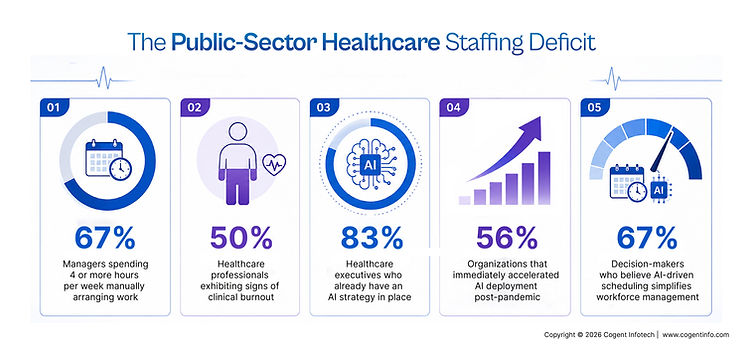
Adopting AI-driven tools further enables autonomous resource allocation, where the software identifies scheduling gaps and suggests adjustments in real-time. However, technology is only as good as the insights derived from it. Establishing consistent feedback loops is essential for iterative model adjustments. By reviewing scheduling data alongside patient feedback, clinics can refine their strategies, ensuring that operational metrics continue to align with the evolving needs of the patient population.
2.4 Frequently Asked Questions
2.4.1 How to Reduce Wait Times Without Increasing Total Headcount
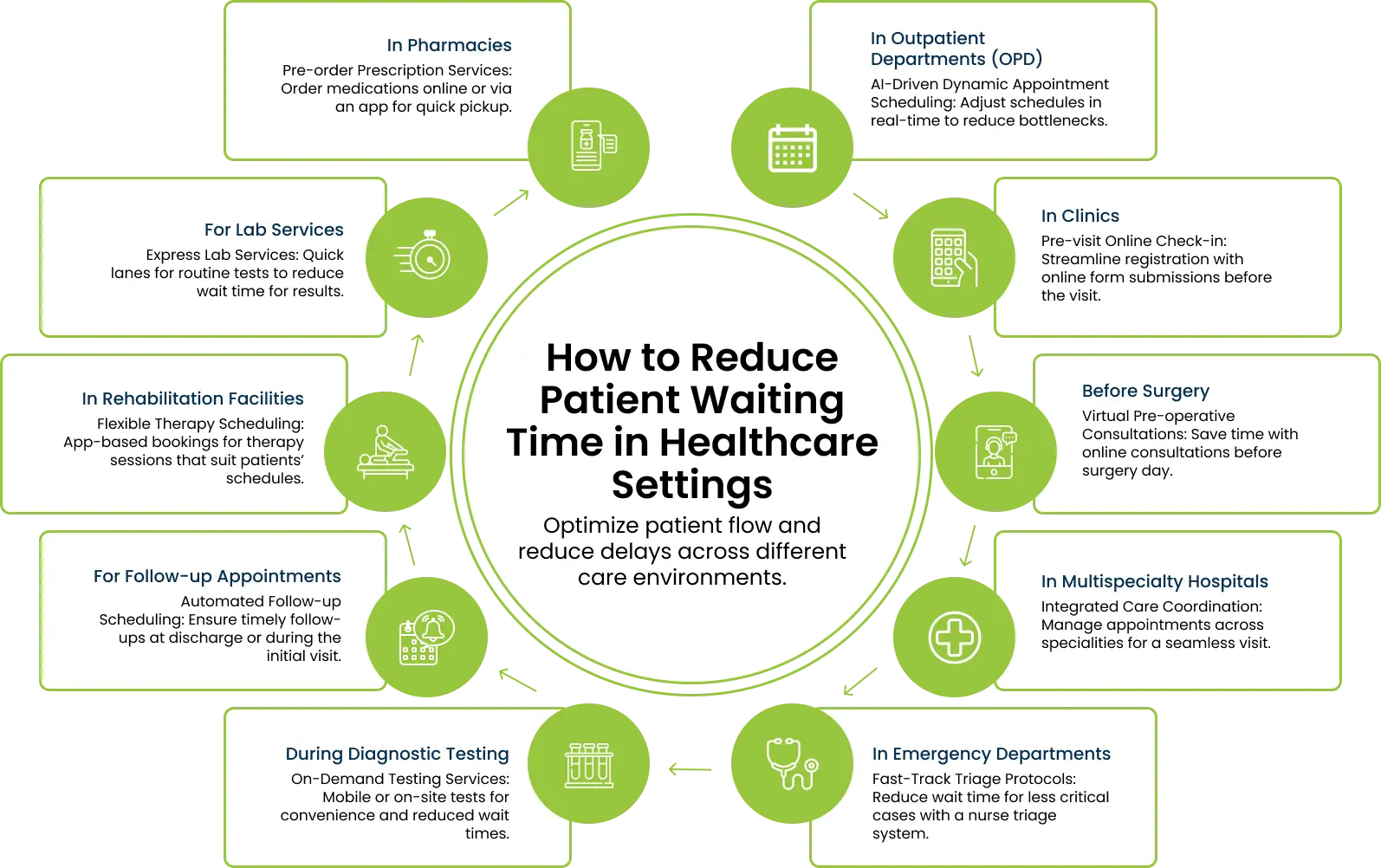
Reducing wait times often involves maximizing the output of existing resources rather than hiring more staff. Focus on streamlining administrative workflows, automating appointment reminders, and utilizing predictive analytics to ensure providers are not idle during slow periods or overwhelmed during surges.
2.4.2 Differentiating Between System Latency and Human-Centric Waiting Time
System latency refers to the time a digital platform or process takes to update, whereas human-centric waiting time is the subjective experience of the patient. While technical speed is important, addressing the human perception of time through transparent communication is equally critical for satisfaction.
2.4.3 Determining the Optimal Frequency for Scheduling Strategy Audits
Scheduling audits should occur quarterly at minimum. This frequency allows for the identification of seasonal trends and ensures that operational adjustments are made based on current data rather than outdated assumptions, keeping the clinic’s efficiency high and sustainable.
Mastering waiting time metrics and scheduling efficiency is more than just an operational exercise; it is a fundamental pillar of patient-centered care. By shifting from reactive scheduling to a data-driven model, clinics can transform the patient experience, reduce staff burnout, and create a sustainable, high-performing environment. The transition toward optimized workflows requires a commitment to analyzing lead times, refining bottleneck management, and integrating modern tools that support both the provider and the patient.
Ultimately, the goal is to create a seamless journey where administrative friction is minimized, allowing providers to focus on what matters most—delivering high-quality health outcomes. As you refine your processes, remember that quantitative data is only half the picture. Pairing your operational analytics with consistent patient satisfaction ratings will provide a complete view of your clinic’s performance. By adopting these strategies, you are not just improving a schedule; you are building a reputation for reliability, empathy, and professional excellence that will serve your clinic for years to come.